


Embroidered lectern cloth of Our Lady of Mount Carmel


170,00€
Taxes includedCatholic product in stock. Products ready to be shipped. You can check the approximate delivery time during the purchase process.
Marian embroidered lectern cloth
- Lectern cloth available in ecru colour.
- Made of polyester and viscose.
- 55 cm (21.65 in) wide.
- 230 cm (90.55 in) long.
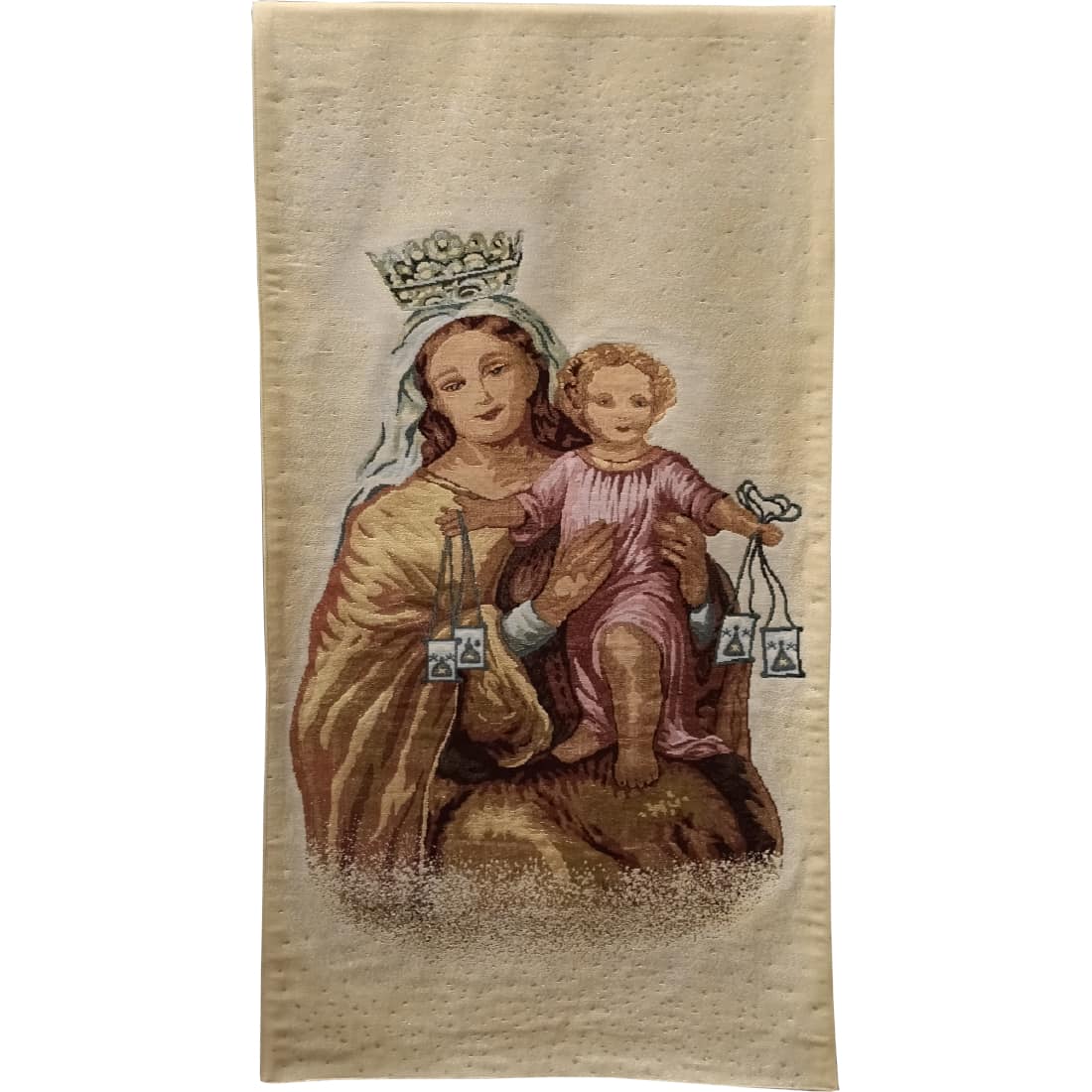
Front embroidery of the lectern cloth | Our Lady of Mount Carmel with the Child
The front side of the cloth presents a classic image of Our Lady of Mount Carmel.
Our Holy Mother Mary appears seated, wrapped in a wide cloak of ochre and brown tones that evoke the Carmelite habit.
Holy Mary holds the Child firmly and at the same time presents the scapular, expressing a double reality: motherhood and mission. She welcomes and protects the faithful as children and, at the same time, offers them the Carmelite scapular, the representation of the habit of the Order of Mount Carmel, symbol of Christian life.
The Child Jesus appears standing on the lap of the Mother. Jesus is not seated, but rather has an active position, cooperating with his Mother in the handing over of the scapular. This pose underlines that the grace associated with this sacramental sign comes, ultimately, from Christ. The scapular is Marian, but its efficacy rests on the redemption given by the Son.
Baroque artists, especially from southern Spain, used this type of composition in their works: the standing Child, slightly leaning towards the Mother, creates a diagonal of movement that avoids rigidity and expresses dynamic tenderness between the two. Jesus leans on the Virgin, but at the same time turns towards the faithful, as if extending the scapular towards whoever contemplates the image.
The presence of the scapulars in the hand of Holy Mary and of the Child emphasises that the grace that the faithful establish when receiving them is, at the same time, Marian and Christological.
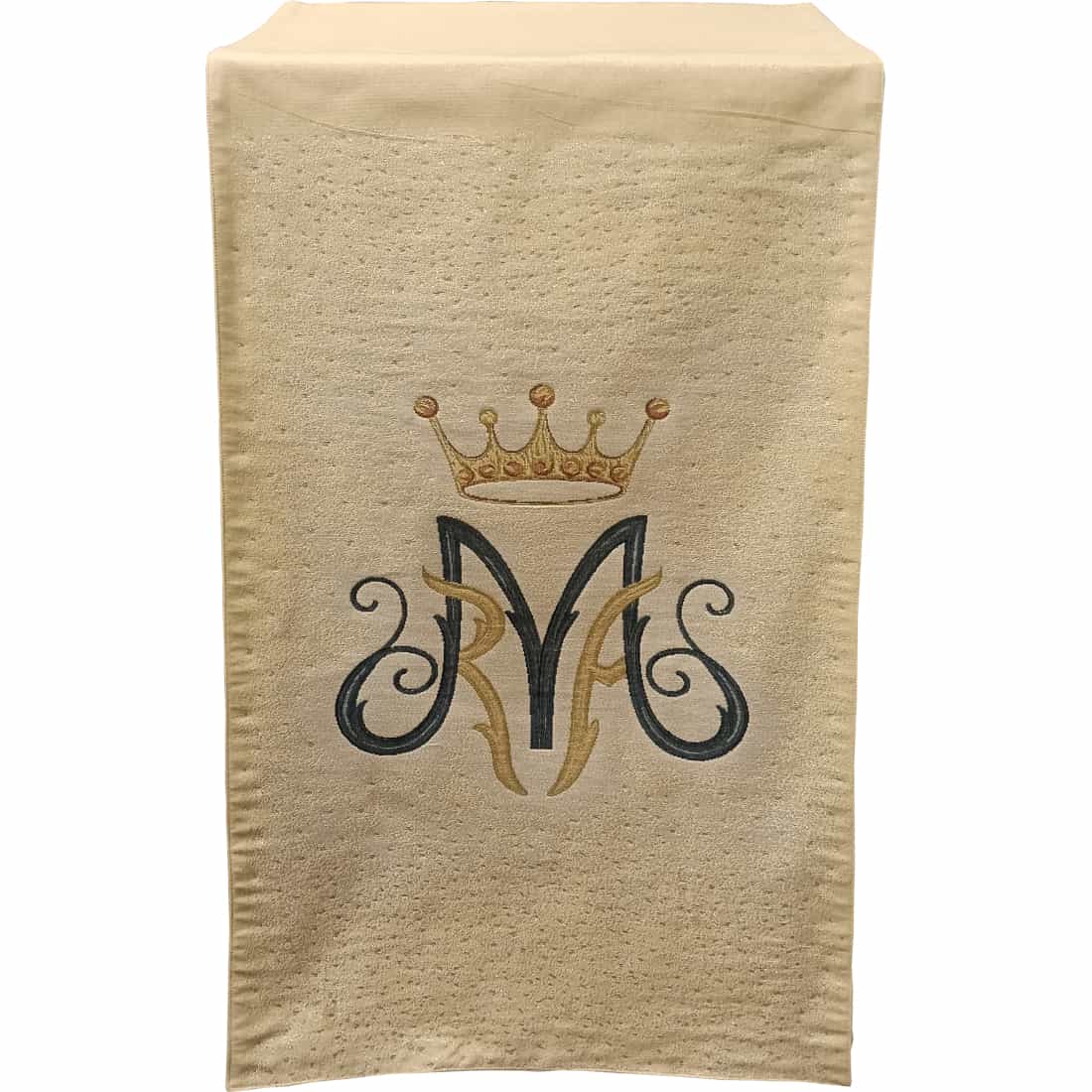
Back embroidery | Marian monogram
The back part of the lectern cloth is decorated with a crowned Marian monogram, anagram of Mary: an ornamental interlacing of letters that represents the name of the Virgin Mary.
The gold crown that rises above the monogram proclaims the spiritual royalty of Mary: she is Queen of Heaven and, in Carmelite terms, Queen and beauty of Carmel.
The scapular of Our Lady of Mount Carmel
Devotion to Our Lady of Mount Carmel is one of the most widespread Marian titles in the Catholic Church. There are innumerable references to the figure of Our Lady of Mount Carmel.
The Catholic object typically related to Carmelite devotion is the scapular of Our Lady of Mount Carmel.
The Directory on Popular Piety and the Liturgy defines the scapular of Carmel, Carmelite scapular or scapular of Our Lady of Mount Carmel as a "reduced form of the Catholic habit of the Order of Brothers of the Blessed Virgin of Mount Carmel".
That is to say, the scapular is a Catholic object that includes the symbolism of Catholic vestments Carmelite, representing the life and spirituality of the monks and nuns who belong to the Order of Mount Carmel (n. 205). The scapular is a miniature of the Carmelite habit, a sacramental that includes the essence of a Catholic life marked by prayer, simplicity, and contemplation.
The same Directory states that the scapular is "an outward sign of the special, filial and trusting relationship which is established between the Virgin, Queen and Mother of Carmel, and the devotees who entrust themselves to her with total dedication and have recourse with full confidence to her maternal intercession; it recalls the primacy of the spiritual life and the need for prayer". The outward scapular is the physical symbol of trust and consecration to Mary.
The imposition of the scapular "must not be a more or less improvised act, but the final moment of a careful preparation, in which the faithful become aware of the nature and the objectives of the association to which they adhere and of the life commitments they assume" (n. 205). Wearing the Carmelite scapular must be a meditated act, rooted in a life that follows the example of Holy Mary and reinforced by catechesis and the liturgy.
