


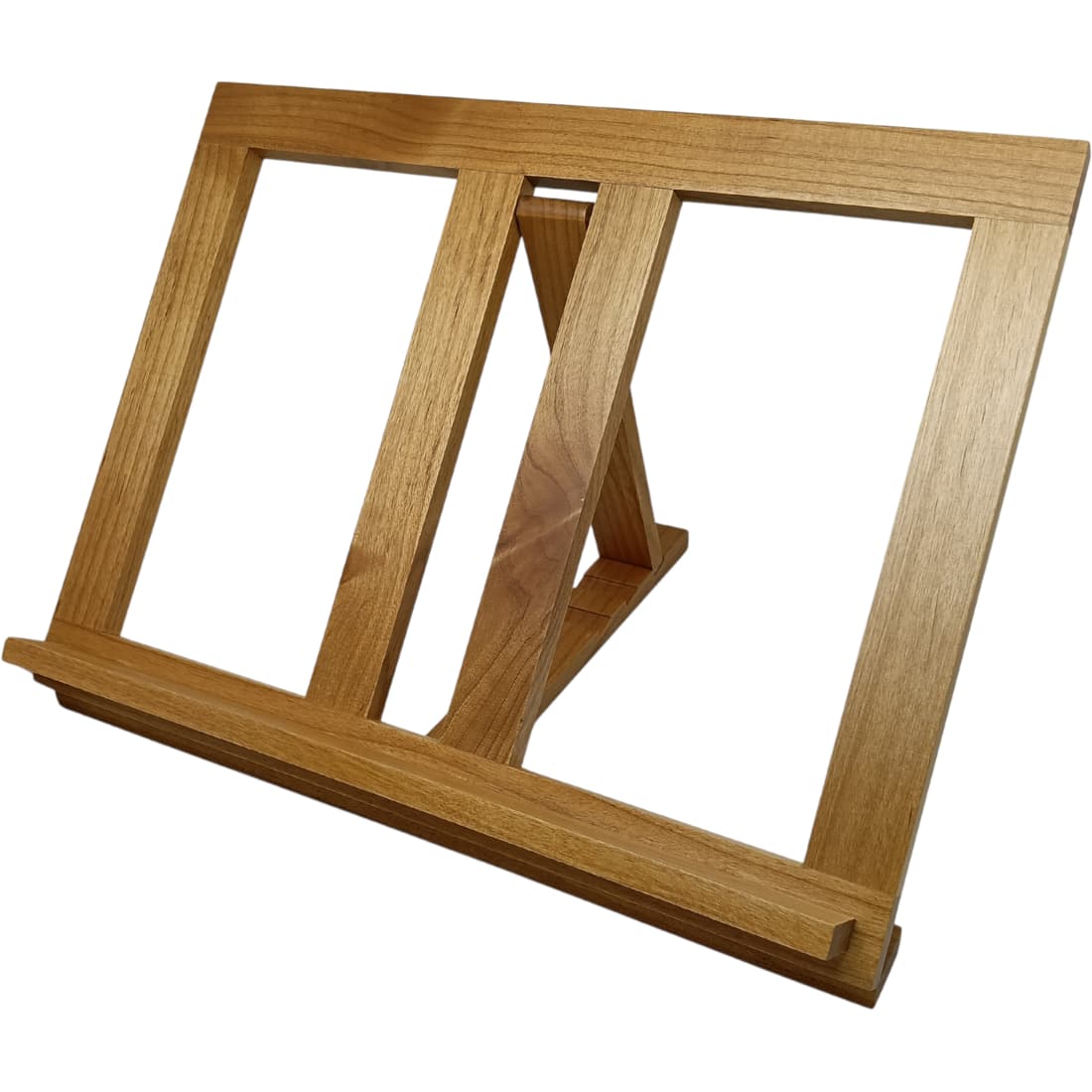
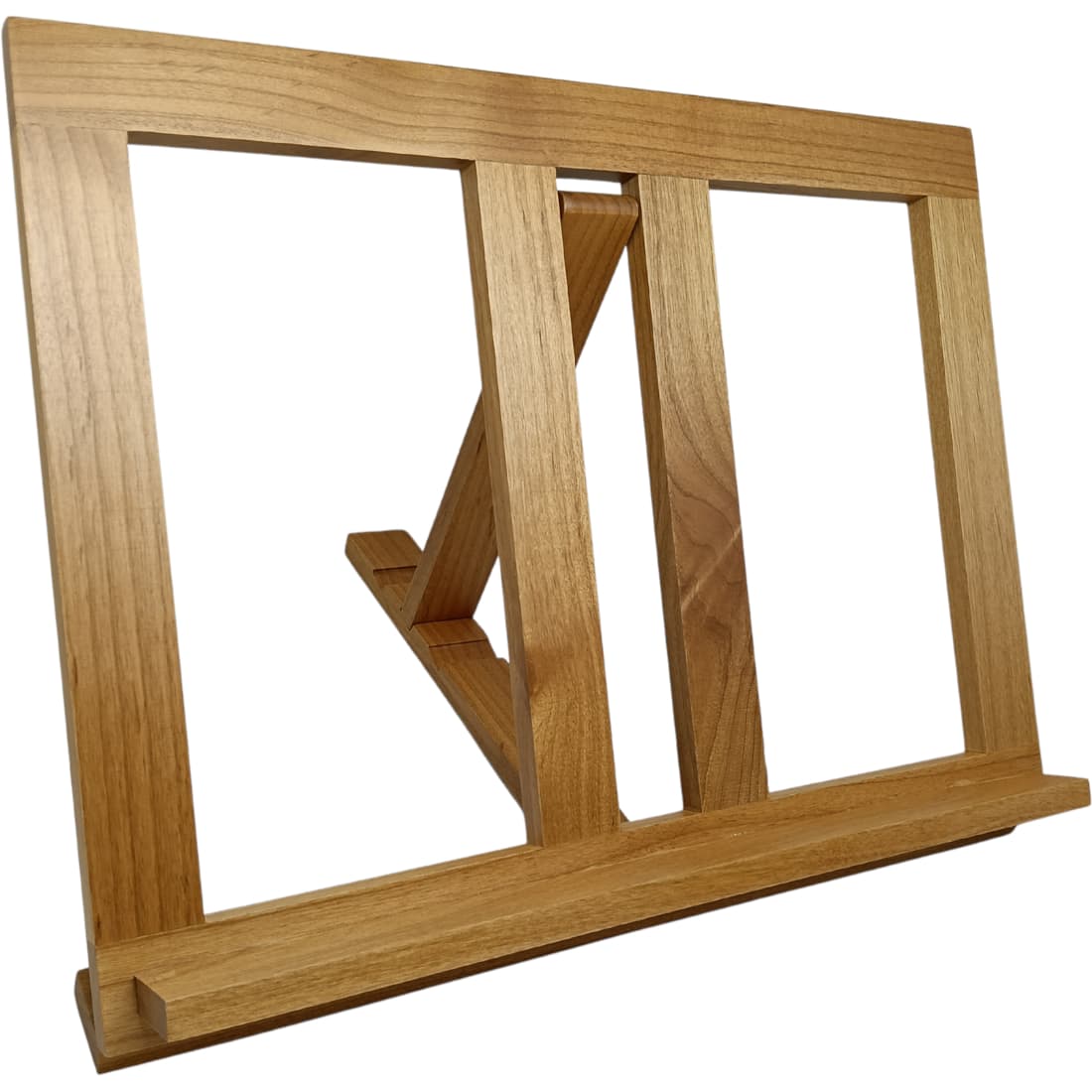
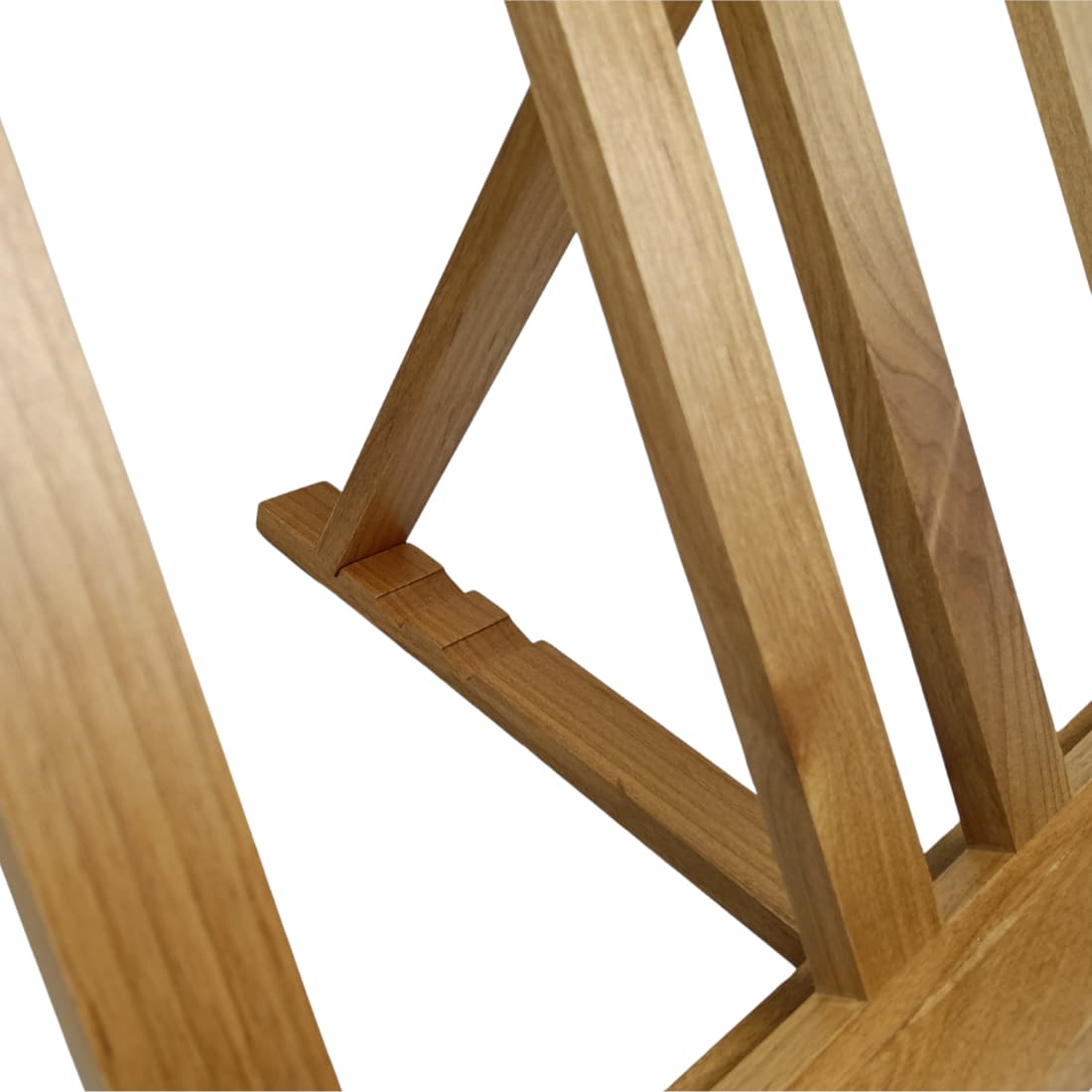
Light wood lectern | 3 adjustable tilt positions


40,00€
Taxes includedCatholic product in stock. Products ready to be shipped. You can check the approximate delivery time during the purchase process.
Wood lectern for Catholic Church
- Light wood lectern with minimalist structure.
- Book stand with 35 cm width x 25 cm height.
- Total dimensions:
- 35 cm width.
- 27 cm height.
- 28 cm depth.
- Compact design intended to make it easier to use in the sanctuary, choir and liturgical reading spaces.
- Natural finish with a sober presence.
- 3 adjustable tilt positions.
- Folding table lectern.
- Other wood lecterns are available in our online shop.
What is an adjustable wood lectern?
The wood lectern for altar table is a liturgical piece of furniture with a minimalist structure that allows sacred books to be held on an inclined plane to make reading easier during religious celebrations.
The wood lectern with 3 tilt positions differs from fixed structures by offering versatility: the reader can adjust the angle according to the type of document, their height or the distance from which it will be read, always optimising visibility and postural comfort.
Priests of the Catholic Church use table lecterns to raise sacred texts.
Wood as a material brings warmth, nobility and respect to the sacred space. Unlike lecterns in acrylic or metal, quality wood ages gracefully, improving its appearance over the years.
Its ease of maintenance and portability make it a practical option for churches that require liturgical flexibility.
History and evolution of the lectern in liturgical tradition
Lecterns have a long history in Christian liturgical practice. The first documented records of their use date back to the appearance of the earliest Christian basilicas.
Throughout the Middle Ages, altar lecterns were consolidating their presence in European liturgical practice until they reached the forms we recognise today.
Before the introduction of lecterns, the common practice was to support missals and liturgical texts on special high-quality fabric cushions.
The Ceremonial of Bishops prescribes this use of the cushion for Pontifical Mass, a practice that persists in celebrations of particular solemnity.
In Hispanic America, there is a special typology known as "lectern-sacra" or "speaking lectern" (documented especially in the colonial period), which allowed both the Missal and the people's acclamations to be supported. Notable examples of these colonial lecterns are preserved in museums such as the Franz Mayer Museum in Mexico City, testifying to the importance the Church gave to the visual presentation of sacred texts.
The General Instruction of the Roman Missal (GIRM), in its section on the structure of the sanctuary, recognises different ways of presenting the Word of God.
Whereas for the Liturgy of the Word a stable and prominent ambo is preferably used, the Missal can be placed on a portable lectern, particularly in smaller churches or when the celebration requires greater spatial flexibility.
Difference between lectern, ambo, choir lectern and pulpit
It is common to confuse these four elements of liturgical furniture, although they fulfil different functions in the celebration.
The lectern is a mobile support or smaller volume designed to hold the Missal or other books at an angle that makes reading easier. It is portable, flexible and can be placed in various parts of the sanctuary or church according to the needs of each celebration.
The ambo is a fixed, more prominent and monumental structure, specifically intended for the proclamation of the Word of God during the Liturgy of the Word (readings and Gospel).
The GIRM underlines that "the dignity of the Word of God requires that in the church there be a suitable place from which it is proclaimed" and recommends that this be "a stable ambo". The ambo is generally larger than a lectern and is built from noble materials (wood, stone or metal) to reflect the importance of what is proclaimed there.
A choir lectern is, for its part, a variant of lectern with two or four faces that is usually placed in the centre of church choirs, especially cathedrals and collegiate churches, to support large choir books used in the Divine Office.
The pulpit is an elevated structure, often with a balustrade, from which homilies and sermons are delivered, or instructions are given. Historically it was very common in medieval churches and can be seen in many traditional Catholic churches.
Unlike the ambo, which is primarily oriented towards the service of the proclaimed Word of God, the pulpit has a more oratorical character, allowing the preacher's voice to project to the whole assembly.
In contemporary practice, many churches have permanent ambos for the Liturgy of the Word and use portable lecterns for the Missal, combining the solemnity of a dedicated ambo with the flexibility that a lectern provides for other texts of the celebration.
