


Diaconal dalmatic | Braid trim | Holy Week


195,00€
Taxes includedCatholic product in stock. Products ready to be shipped. You can check the approximate delivery time during the purchase process.
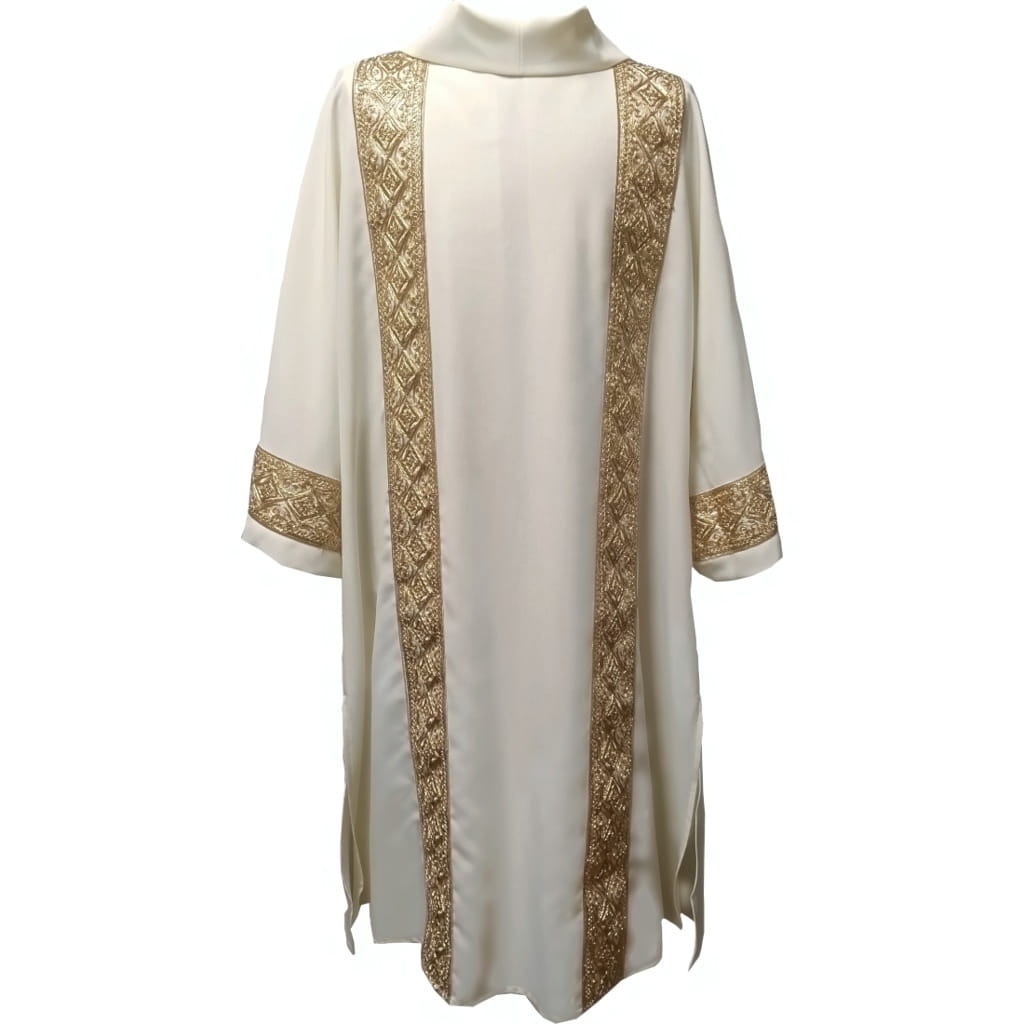
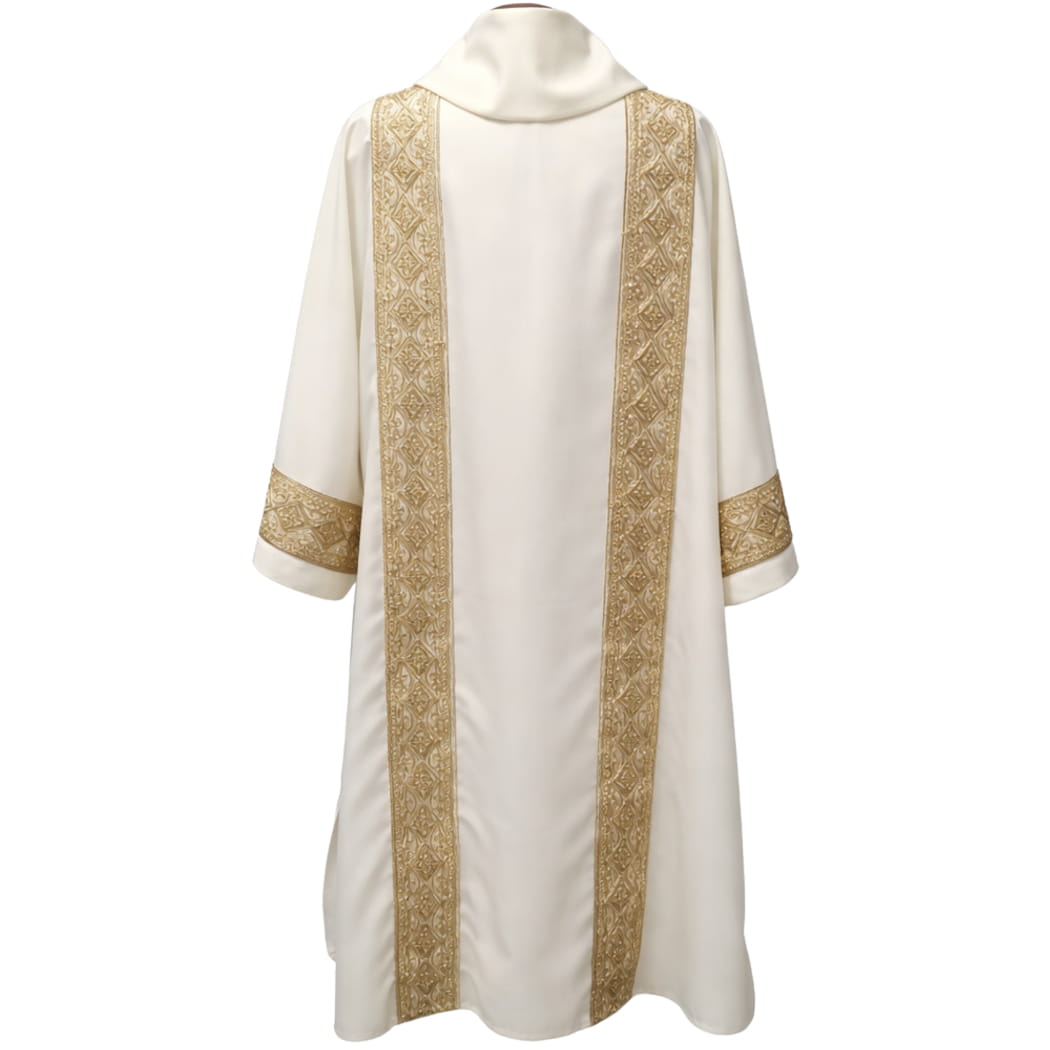
Diaconal dalmatic | Dalmatic for Holy Week
- Diaconal dalmatic for parish use.
- Beige colour. Also available in other colours.
- Made in 100% polyester, with a smooth feel and simple maintenance.
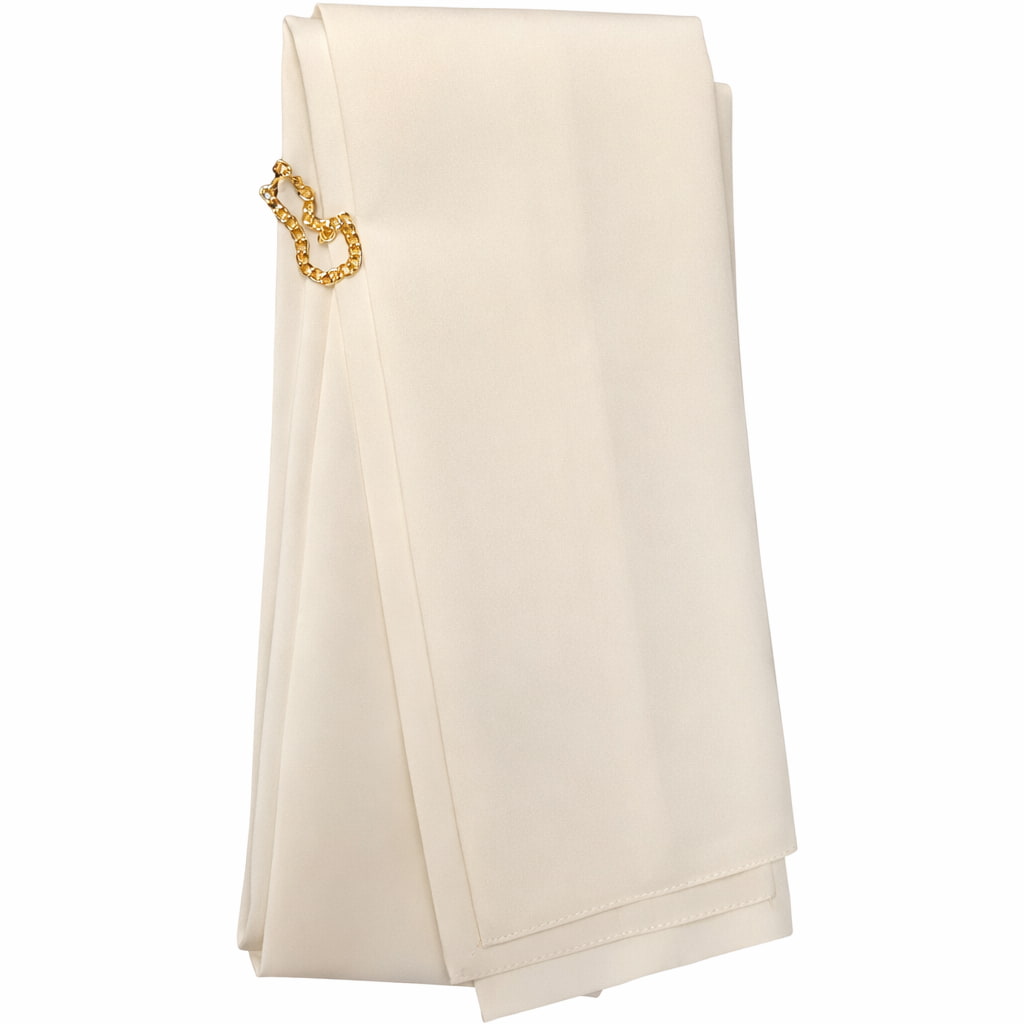
- Plain matching liturgical stole included in the sale price.
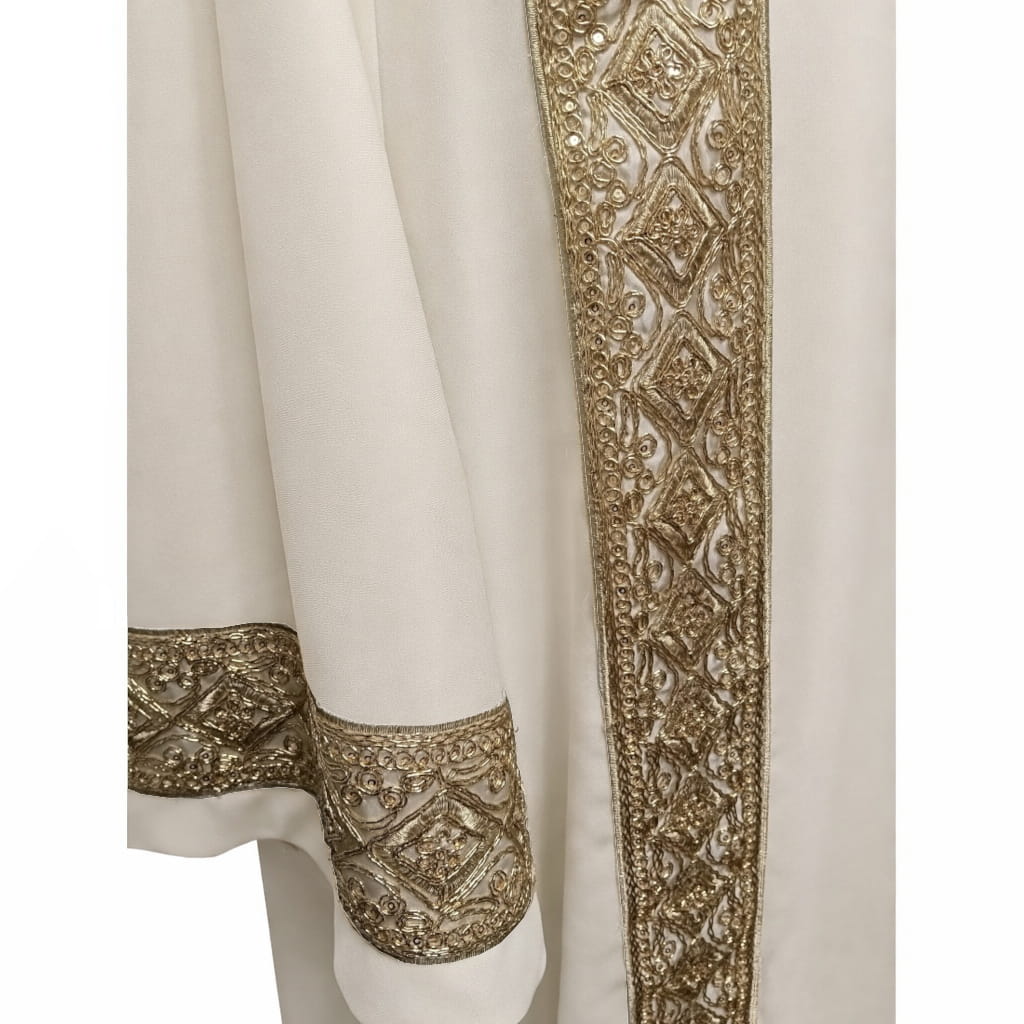
- Decorated with trim braid with geometric motifs in gold tone.
- Wide sleeves.
- Open sides with slits.
- Also for sale, the beige diaconal dalmatic with the embroidered Cross.
What is a dalmatic?
The dalmatic is the proper outer vestment of the deacon at Mass. The deacon wears it over the alb and stole and may omit it for celebrations of lesser solemnity, as GIRM n. 338 indicates. The dalmatic is a liturgical vestment with a rectangular cut, open at the sides and with wide sleeves that facilitate the movement of the arms.
Diaconal dalmatic in Holy Week: service of the deacon
In celebrations proper to the Paschal Triduum and in more solemn liturgies, the dalmatic is used as the outer vestment of the deacon over the alb and stole. This practice is set out in GIRM n. 338. In the context of Holy Week, the lateral braid helps to identify the ministry of service and assistance at the altar. In this way, the presence of the deacon remains visually integrated into the liturgical action.
The diaconal dalmatic is linked to the diaconate. Catechism n. 1596 recalls that the deacon is ordained for tasks of service in the liturgy, the word, and charity. Therefore, in celebrations with several ministers or where the diaconal ministry becomes especially visible, the vestments facilitate an orderly arrangement. Thus, role clarity is maintained without overloading the whole.
During the Eucharistic Prayer, the service of the deacon takes place close to the celebrant. GIRM n. 179 describes his position alongside the priest, a little behind, to assist in matters relating to the chalice or the missal. This concrete indication requires freedom of movement in sleeves and sides. Consequently, the cut of the garment helps to make brief movements and liturgical gestures without tightness.
Fabric and trim: comfort and presence in the sanctuary
100% polyester provides resistance for frequent use, maintaining an even drape. This characteristic is practical in communities with recurring celebrations and for permanent deacons with regular service. The fabric facilitates drying and reduces the need for intensive ironing. In this way, a well-kept presence is preserved with regular maintenance.
The trim braid, visible on the sides and on the cuffs, provides a vertical axis that orders the silhouette. The geometric motif in gold-plated tone creates contrast over the ivory beige without saturating the overall effect.
Meaning of dalmatic | Etymology
The term "dalmatic" comes from the Latin dalmatica, which literally means "tunic or vestment of Dalmatia". Dalmatia was a region located on the Adriatic coast that currently corresponds to territories of Croatia, Bosnia and Herzegovina, and Montenegro. It is a lexical borrowing from Late Latin incorporated into Spanish at the end of the Late Middle Ages.
The word clearly reflects the geographical origin of the garment, since the dalmatic was a characteristic vestment of that region before being adopted by Rome.
